History's People by Margaret MacMillan
History (2015 - 348 pp.)
History's People has an admirable goal: to explain and illustrate "the important and complex relationship between biography and history, individuals and their times." (front dust jacket) Margaret MacMillan, of Paris 1919 fame, does so using disparate tales of historical figures grouped into five rough categories: Persuasion, Hubris, Daring, Curiosity, Observers. These categories also serve as the five chapter names, with the introduction being part of the first and the conclusion being part of the fifth.
Most of the book consists of extended anecdotes about MacMillan's couple dozen chosen historical figures. She brings out their personalities through drifting between their impacts on the world and their more private times, such as in her comparison between Otto von Bismarck the diplomat and Bismarck the disaffected rural young adult. Analyses of the Prussia of the 1860s are balanced by a portrait of a Bismarck who gleefully wrote: "I shall get pissed on the king's birthday and cheer him vociferously and the rest of the time I shall sound off regularly and my every other word will be; 'Gad, what a splendid horse!'". (30) Max "Lord Beaverbrook" Aitken receives a similar treatment: MacMillan oscillates between his wit and his politics, including the timeless quotation, "Nothing... is so bad as consistency." (168) Aitken and I agree on that. MacMillan uses Margaret Thatcher as an example of a strong-willed democratic leader who ruled by her principles until that no longer worked: "Standing up for principle, showing leadership, being tough - these had served her well in the past. And she had driven away almost anyone who would tell her she was making a huge mistake..." (116) Thatcher rose to her height during the Falklands War and fell from grace over a poll tax; as always, it is seemingly boring taxation issues that decide the fates of titans.
Followers of the past few decades' growth in women's history should be delighted to read "Curiosity", in which MacMillan tells stories of women who discovered more in their societies than was thought possible. They tended to be British, and they tended to live in the colonies, such as Elizabeth Simcoe (Upper Canada), Fanny Parkes (India) and Edith Mary Durham (the Balkans). Among Simcoe's observations is a description of a raccoon, which "resemble[s] a Fox, are an exceedingly fat animal with a bushy tail." (235) The most surprising Simcoe-related tidbit is that in 1790, Upper Canada's population was only "around ten thousand". (226) Its remoteness in the context of the British Empire and its extremely low population make it almost like an 18th-century analogue to what Nunavut (pop. 31,000) is within Canada now.
History's People is an easy, accessible read. This is good for anyone wanting to read it in a less-than-traditional-academic setting, like on an airplane. Each chapter is readable in one sitting, so the book only takes about five hours to read in total. (It may take longer if you lack a history degree but I have no data on that.) The page count is deceptive because the margins are almost an inch on the top and sides, with an A4-style bigger bottom margin. History's People is readable in a week if you're willing to devote some time to it, which is ideal for a book-a-week-style undergraduate history capstone seminar course.
The downside to the book's accessibility is its lack of citations. There is a good list of sources at the end, but there are no pinpoint footnotes or endnotes. Although I am inclined to trust MacMillan's research based on her previous work, this is nonetheless bothersome in the event I would want to cite History's People in anything else. The upshot is that it reads like a lecture series. I wouldn't be surprised if she'd told these stories as lectures before.
The stories often don't feel relevant to each other. Although MacMillan draws parallels between the subjects' experiences, especially in "Curiosity", many of the facts appear arbitrary. The book would have been improved by more frequent reference to the central thesis of intersection between history and biography "Hubris" especially falls victim to disjointedness. Adolf Hitler and Josef Stalin can be grouped in a time period if for no other reason. Grouping Woodrow Wilson and Margaret Thatcher as Anglosphere democratic leaders lacks insight considering the drastically different backgrounds they had and circumstances they faced. Aside from the disastrous attempt to join the League of Nations, Wilson never really fell. His refusal to send any Republicans to the Paris Peace Conference, though, including either William Howard Taft or Henry Cabot Lodge, portended more recent American events.
Tunnel vision, the superimposition of contemporary values onto people who lived in previous worlds, is all too common in history. MacMillan warns against it in her discussion of characters whose problems largely reflected their time periods: "We cannot expect, for example, Queen Elizabeth I of Britian to have behaved like a twenty-first century feminist. And whenever we are trying to understand why historical figures behaved as they did, we must always try to gauge what they themselves could plausibly have seen as the alternatives before them." (85) Much like Monday morning quarterbacking tells us little of how NFL players should have won championships, history's people are limited to the facts and ideas before them. In History's People, and especially in its well-written conclusion, MacMillan takes on a difficult but rewarding topic: how the world shapes people, and in turn, how they shape it.
Ease of Reading: 7
Educational Content: 7
Wednesday, May 18, 2016

Wednesday, May 11, 2016
The Higher Education Act and the Problem of Success
Monday on LinkedIn Pulse, Carlo Salerno argued against the reauthorization of the United States Higher Education Act by noting that schools already pay indirectly for dropouts through recruitment and other efforts. Therefore, subsidizing of dropouts by schools isn't needed, as it creates a situation in which schools pay twice. The US government clearly doesn't agree.
The argument for what the Department of Education calls "focusing higher education on student success" can be found here. Its chief arguments, in sum, are that (a) "In today’s economy, higher education is no longer a luxury for the privileged few, but a necessity for individual economic opportunity and America’s competitiveness in the global economy"; (b) "Colleges have not focused on keeping costs down, and tuition has spiraled out of control"; (c) "more students need access to vastly more affordable and quality higher education opportunities"; and (d) "We must shift focus toward creating an accountability and incentive structure that provides educational opportunity by ensuring that students are graduating on time with an affordable, meaningful* degree or credential".
I'm far from against making higher education more affordable. As a Canadian, it's practically my duty. It's the commodification of education that makes me bristle.
The DoE's argument has two major problems:
1. It underestimates the efforts that go into graduation
Tuition payment, enrollment and attendance are not guarantees of graduation. There is an increasing attitude that someone who pays to attend a university should receive a degree simply for having paid, such as these discussions in The Economist, US News and the University of Florida's online newsletter. Notions of return on investment for degrees play on this simple theme; a degree is something to be purchased that will pay off after some amount of time, much like a stock paying dividends. Purchasing a stock requires no more effort than the purchase itself, though. There isn't a series of tasks ensuring that the purchaser is qualified to hold it. Purchasing a seat in a classroom isn't purchasing a degree.
Salerno makes a good, but incomplete, point in saying that
When thinking of a dropout rate** as an accumulated failure rate, it starts making more sense. If professors are willing to award Fs, and students are the ones in charge of how well they perform academically, it follows that certain students will have higher failure rates than others. The ones who fail most frequently are more likely to drop out. While I can't imagine schools like when students drop out, between academic probation and professor availability there's only so much a school can do. A collegial atmosphere that encourages independent attendance of professor office hours does more to help students learn the material than any number of ROI-based talks can.
To conclude with a clunky yet apt analogy, think of paying for tuition as buying a lawnmower and graduating with a degree as having freshly cut grass. Buying a lawnmower doesn't lead to having freshly cut grass. It's the actual mowing of the lawn - in other words, the work the student puts into his or her university courses - that leads to the desired outcome. The better the mowing, the nicer the lawn. Paying tuition gives a student a chance to succeed, not an irrevocable ticket to success. To expect otherwise is to place an obligation on professors that belongs on the students.
2. It focuses on a limited definition of success
The above news columns, as well as Kevin O'Leary's attention-grabbing anti-BA, anti-movie-making videos from last year (and their rebuttals), discuss O'Leary's favourite topic: making money. There's nothing wrong with making money. It just isn't a useful metric for success in isolation.
Consider two students, each with a Bachelor of Arts. For sake of argument, let's say neither advances to graduate or professional school, and neither enters a traditionally high-paying field like investment banking or public administration that often recruits from non-traditional disciplines.
Student Q takes a retail job out of school that pays $30,000 annually. This is about double the United States's federal minimum wage of $7.25 per hour, and higher than almost all state/municipal minimum wages. Possibly the employer even said the higher wage was directly due to the employee's university degree, which is consistent with the Department of Education's article linked above stating that "College graduates with a bachelor’s degree typically earn 66 percent more than those with only a high school diploma". There is no real opportunity for advancement at this hypothetical retail job other than possibly becoming a store manager at some unspecified future time. Given turnover rates in the retail industry, this promotion is a die-roll at best.
Student R doesn't work much after graduation, maybe a few part-time jobs, maybe ones that don't even require a university education. However, Student R does any of:
Hopefully people don't miss that.
---
*"Meaningful" is never defined. Some sources attempt to allocate meaning by major (for example, engineering tends to be thought of as "meaningful"), but none focus on what the student is actually learning.
**This is a dropout rate due to academic factors. Financially motivated dropouts are a different issue entirely.
The argument for what the Department of Education calls "focusing higher education on student success" can be found here. Its chief arguments, in sum, are that (a) "In today’s economy, higher education is no longer a luxury for the privileged few, but a necessity for individual economic opportunity and America’s competitiveness in the global economy"; (b) "Colleges have not focused on keeping costs down, and tuition has spiraled out of control"; (c) "more students need access to vastly more affordable and quality higher education opportunities"; and (d) "We must shift focus toward creating an accountability and incentive structure that provides educational opportunity by ensuring that students are graduating on time with an affordable, meaningful* degree or credential".
I'm far from against making higher education more affordable. As a Canadian, it's practically my duty. It's the commodification of education that makes me bristle.
The DoE's argument has two major problems:
1. It underestimates the efforts that go into graduation
Tuition payment, enrollment and attendance are not guarantees of graduation. There is an increasing attitude that someone who pays to attend a university should receive a degree simply for having paid, such as these discussions in The Economist, US News and the University of Florida's online newsletter. Notions of return on investment for degrees play on this simple theme; a degree is something to be purchased that will pay off after some amount of time, much like a stock paying dividends. Purchasing a stock requires no more effort than the purchase itself, though. There isn't a series of tasks ensuring that the purchaser is qualified to hold it. Purchasing a seat in a classroom isn't purchasing a degree.
Salerno makes a good, but incomplete, point in saying that
"If institutions could control how much students learn, then why would they consciously choose to send unprepared graduates into the labor market where they struggle to find and keep employment? And if they could control who graduates and who doesn’t, what economic rationale do they have for producing a mix of graduates and dropouts?"Institutions can't control the labour market, nor can they control how much students learn. However, there may be an incentive for certain undergraduate programs to have a positive failure rate in order to emphasize the difficulty and rigor of the program. Note that a failure rate and a dropout rate aren't the same thing. A student who gets an F in one class may perform wonderfully in all the others.
When thinking of a dropout rate** as an accumulated failure rate, it starts making more sense. If professors are willing to award Fs, and students are the ones in charge of how well they perform academically, it follows that certain students will have higher failure rates than others. The ones who fail most frequently are more likely to drop out. While I can't imagine schools like when students drop out, between academic probation and professor availability there's only so much a school can do. A collegial atmosphere that encourages independent attendance of professor office hours does more to help students learn the material than any number of ROI-based talks can.
To conclude with a clunky yet apt analogy, think of paying for tuition as buying a lawnmower and graduating with a degree as having freshly cut grass. Buying a lawnmower doesn't lead to having freshly cut grass. It's the actual mowing of the lawn - in other words, the work the student puts into his or her university courses - that leads to the desired outcome. The better the mowing, the nicer the lawn. Paying tuition gives a student a chance to succeed, not an irrevocable ticket to success. To expect otherwise is to place an obligation on professors that belongs on the students.
2. It focuses on a limited definition of success
The above news columns, as well as Kevin O'Leary's attention-grabbing anti-BA, anti-movie-making videos from last year (and their rebuttals), discuss O'Leary's favourite topic: making money. There's nothing wrong with making money. It just isn't a useful metric for success in isolation.
Consider two students, each with a Bachelor of Arts. For sake of argument, let's say neither advances to graduate or professional school, and neither enters a traditionally high-paying field like investment banking or public administration that often recruits from non-traditional disciplines.
Student Q takes a retail job out of school that pays $30,000 annually. This is about double the United States's federal minimum wage of $7.25 per hour, and higher than almost all state/municipal minimum wages. Possibly the employer even said the higher wage was directly due to the employee's university degree, which is consistent with the Department of Education's article linked above stating that "College graduates with a bachelor’s degree typically earn 66 percent more than those with only a high school diploma". There is no real opportunity for advancement at this hypothetical retail job other than possibly becoming a store manager at some unspecified future time. Given turnover rates in the retail industry, this promotion is a die-roll at best.
Student R doesn't work much after graduation, maybe a few part-time jobs, maybe ones that don't even require a university education. However, Student R does any of:
- Train to be an Olympic athlete (possibly beginning this training during university)
- Complete a creative project such as a book or movie that garners more critical or aesthetic appreciation than income
- Participate in and/or coordinate global volunteer efforts, possibly in places he or she learned about while in university
- Any number of other things that would take too long to list
Critical successes often resonate more than financial successes. They often last longer too; in 2014, the New York Times posited that someone whose income is in the 98th percentile's children will only earn in the 65th percentile. The only metrics for success the ROI-based articles, the Department of Education or Salerno use are graduation rate, time to graduation, and future earnings. None of these accurately predict success on any grand scale. The subjects learned in university can lead to these successes that are nearly impossible to quantify.
These two problems dovetail.
The ROI attitude toward university - that a degree is a purchase that yields dividends - and the narrow definition of success speak to strikingly similar attitudes. They combine to state this: in the short term, a degree is a piece of paper to be purchased, and success is embodied in the attainment of that purchase. In the long term, a degree's results are in future earnings, and success is embodied in those earnings. It should be evident by now why this attitude is wrong.
Success isn't showing up and receiving something that's given to you. Whether in university, in business or in anything else, it's about understanding the challenges you face and putting in the smart, hard work to address them. The same way no one would ever start a business and then put in no subsequent effort to make it succeed, no one should ever expect to enroll in a university and then not be expected to put the necessary effort into success.
Hopefully people don't miss that.
---
*"Meaningful" is never defined. Some sources attempt to allocate meaning by major (for example, engineering tends to be thought of as "meaningful"), but none focus on what the student is actually learning.
**This is a dropout rate due to academic factors. Financially motivated dropouts are a different issue entirely.
Tuesday, May 10, 2016
Me on Amazing Stories: Multiple Intelligences and "The Little Black Bag"
I now have a blog on Amazing Stories. Amazing Stories is one of the oldest science fiction magazines in existence, having first come about in April 1926. It's been discontinued at times but now survives with blogs attached for the present day.
My first entry, "Multiple Intelligences in 'The Little Black Bag'", is now available for consumption. It applies Howard Gardner's multiple intelligences, especially interpersonal and intrapersonal, to a story in which intelligence is paramount but even the smartest suffer. Cyril Kornbluth's "The Little Black Bag" is an unheralded classic of science fiction, so I was happy to make a discussion of it my first entry.
I'll also post writing prompts over there. The Amazing Stories format, more narrowly focused than here but with less of an obligation to be remotely entertaining, fits them perfectly. While you're here, you can read about anything from raccoons to early 18th-century religious spats. While you're there, classic SF (up until about 1960 unless I decide otherwise) is king.
Here's my author page: http://amazingstoriesmag.com/authors/matthew-pm-gordon/
A fun quirk: unlike the typical every Monday, every Friday, etc. format, I'll be posting full entries over there on the 10th of every month and writing prompts on the 30th.
My first entry, "Multiple Intelligences in 'The Little Black Bag'", is now available for consumption. It applies Howard Gardner's multiple intelligences, especially interpersonal and intrapersonal, to a story in which intelligence is paramount but even the smartest suffer. Cyril Kornbluth's "The Little Black Bag" is an unheralded classic of science fiction, so I was happy to make a discussion of it my first entry.
I'll also post writing prompts over there. The Amazing Stories format, more narrowly focused than here but with less of an obligation to be remotely entertaining, fits them perfectly. While you're here, you can read about anything from raccoons to early 18th-century religious spats. While you're there, classic SF (up until about 1960 unless I decide otherwise) is king.
Here's my author page: http://amazingstoriesmag.com/authors/matthew-pm-gordon/
A fun quirk: unlike the typical every Monday, every Friday, etc. format, I'll be posting full entries over there on the 10th of every month and writing prompts on the 30th.
Saturday, April 30, 2016
April's Book: On Writing
On Writing by Stephen King
Non-fiction (2000 - 288 pp.)
"Fiction writers, present company included, don’t understand very much about what they do—not why it works when it’s good, not why it doesn’t when it’s bad." (10)
Writing advice can be fun. When it's based on personal experiences, rather than lorded over the person who's set to receive it, it's even more fun. Although I've never been able to get into a Stephen King novel (I promise I'll try The Stand at some point), I thoroughly enjoyed these almost 300 pages of theory and practice he's put into his prolific body of work.
King's inspiration largely comes from encountering questions in the world and then answering them. A short example he uses is switching the sexes of the protagonist and either the deuteragonist or antagonist (172). King gives a stock news-style story about a man stalking an ex-wife, then turns it into a writing prompt in which a woman stalks her ex-husband. Why does a stalking ex-wife need to escape a mental institution rather than the city jail? There's a question. Later on, King discusses "the Hotel Story" (271), which later became the 2007 movie Room 1408. (It was an entertaining movie, corny reasoning behind the selection of the room number aside.*) The developments of prompts into stories, beginning with King's breakthrough 1974 debut Carrie (80), makes discussing the writing process fun.
I had never thought of King as having a huge comedic streak, but I was consistently in stitches. From a childhood story about visiting the ear doctor (25), to a reflection that high school is like "hostages locked in a Turkish bath" (54), to, on the literary side of things, a discussion of Edgar Wallace's Plot Wheel (167), King produces laughs.
My favourite part of On Writing is its lack of didacticism. I don't mind didacticism in fiction, but when it comes to actual writing advice, building discussion around personal strengths is far more productive than trying to funnel everyone into one mould. King's worldview clashes with many, and that's fine. For example, King discusses his ideal reader at length, who for him is his wife Tabitha. (215) This completely opposes Joyce Carol Oates's philosophy: "Don’t try to anticipate an ideal reader — or any reader. He/she might exist — but is reading someone else." King also goes so far as to to dismiss research-heavy books in saying "I simply made up all the stuff I didn't know" (229), as well as write without having a clue how the book will end (165), which has garnered him a reputation as a "pantser". He dismisses setting-based stories (178), yet I consider setting-based stories like Ann Radcliffe's The Romance of the Forest among the classics. King isn't trying to give a writing lesson so much as impart his views, complete with biases and self-aware of those biases. I can respectfully disagree with King where I choose and not have to feel like I need to prepare an academic rebuttal.(Consider the quotation at the top.) There's a lot we don't know about creativity. I appreciate that.
One point King makes that I cannot abide, however, is that in medias res "necessitates flashbacks". (224) The preceding events can also be filled in using setting description, King's aforementioned bane. Take a Law & Order-style situation in which the viewership first sees a grisly murder taking place, and then sees a pile of ten bodies immediately afterward. Flashbacks are unnecessary to conclude that ten murders have taken place. Alternatively, if they haven't, my example can be a good red herring. There's usually more than one way for a writer to get wherever he or she is trying to go, so I lean against any statement that a certain situation forces a writer into a corner.
I also disagree with King's defence of creative writing subsidies. Creative artists are frequently shoehorned into doing what their funders consider acceptable, making patronage only partially useful. As a writer, I would be fine being hired to write something, as long as I'm trying to release a product rather than pure art.
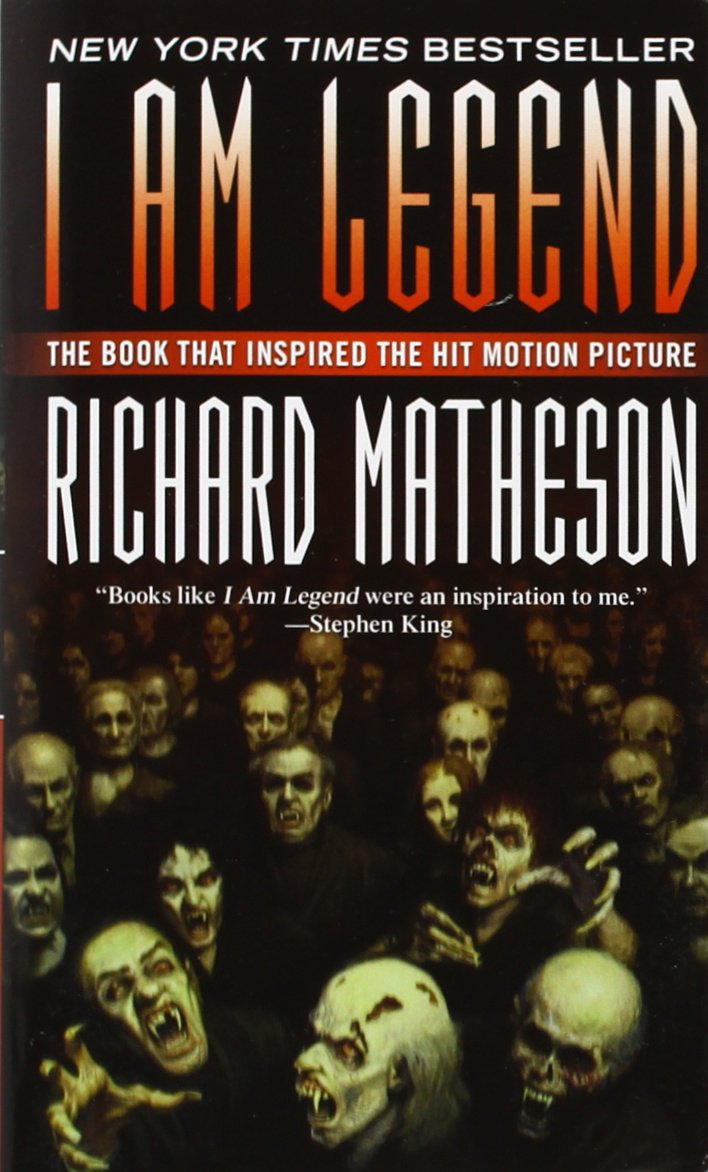
The very end of On Writing lists 96 of King's favourite books. (286-288) Among them are John Irving's A Widow for One Year and Harper Lee's To Kill a Mockingbird. Curiously, the list lacks Richard Matheson's I Am Legend despite King's testimonial on the cover of this edition. I don't know how far I'll get into the whole list, but it's a nice repository that'll live on even after much of everyone else's work.
Ease of Reading: 9
Educational Content: 5
*1 + 4 + 0 + 8 = 13. I'm serious, this is how it was picked. Throw in the tendency of some hotels to omit the 13th floor, essentially making the 14th floor the unlucky one, and there you go.
Non-fiction (2000 - 288 pp.)
"Fiction writers, present company included, don’t understand very much about what they do—not why it works when it’s good, not why it doesn’t when it’s bad." (10)
Writing advice can be fun. When it's based on personal experiences, rather than lorded over the person who's set to receive it, it's even more fun. Although I've never been able to get into a Stephen King novel (I promise I'll try The Stand at some point), I thoroughly enjoyed these almost 300 pages of theory and practice he's put into his prolific body of work.
King's inspiration largely comes from encountering questions in the world and then answering them. A short example he uses is switching the sexes of the protagonist and either the deuteragonist or antagonist (172). King gives a stock news-style story about a man stalking an ex-wife, then turns it into a writing prompt in which a woman stalks her ex-husband. Why does a stalking ex-wife need to escape a mental institution rather than the city jail? There's a question. Later on, King discusses "the Hotel Story" (271), which later became the 2007 movie Room 1408. (It was an entertaining movie, corny reasoning behind the selection of the room number aside.*) The developments of prompts into stories, beginning with King's breakthrough 1974 debut Carrie (80), makes discussing the writing process fun.
I had never thought of King as having a huge comedic streak, but I was consistently in stitches. From a childhood story about visiting the ear doctor (25), to a reflection that high school is like "hostages locked in a Turkish bath" (54), to, on the literary side of things, a discussion of Edgar Wallace's Plot Wheel (167), King produces laughs.
My favourite part of On Writing is its lack of didacticism. I don't mind didacticism in fiction, but when it comes to actual writing advice, building discussion around personal strengths is far more productive than trying to funnel everyone into one mould. King's worldview clashes with many, and that's fine. For example, King discusses his ideal reader at length, who for him is his wife Tabitha. (215) This completely opposes Joyce Carol Oates's philosophy: "Don’t try to anticipate an ideal reader — or any reader. He/she might exist — but is reading someone else." King also goes so far as to to dismiss research-heavy books in saying "I simply made up all the stuff I didn't know" (229), as well as write without having a clue how the book will end (165), which has garnered him a reputation as a "pantser". He dismisses setting-based stories (178), yet I consider setting-based stories like Ann Radcliffe's The Romance of the Forest among the classics. King isn't trying to give a writing lesson so much as impart his views, complete with biases and self-aware of those biases. I can respectfully disagree with King where I choose and not have to feel like I need to prepare an academic rebuttal.(Consider the quotation at the top.) There's a lot we don't know about creativity. I appreciate that.
One point King makes that I cannot abide, however, is that in medias res "necessitates flashbacks". (224) The preceding events can also be filled in using setting description, King's aforementioned bane. Take a Law & Order-style situation in which the viewership first sees a grisly murder taking place, and then sees a pile of ten bodies immediately afterward. Flashbacks are unnecessary to conclude that ten murders have taken place. Alternatively, if they haven't, my example can be a good red herring. There's usually more than one way for a writer to get wherever he or she is trying to go, so I lean against any statement that a certain situation forces a writer into a corner.
I also disagree with King's defence of creative writing subsidies. Creative artists are frequently shoehorned into doing what their funders consider acceptable, making patronage only partially useful. As a writer, I would be fine being hired to write something, as long as I'm trying to release a product rather than pure art.
The very end of On Writing lists 96 of King's favourite books. (286-288) Among them are John Irving's A Widow for One Year and Harper Lee's To Kill a Mockingbird. Curiously, the list lacks Richard Matheson's I Am Legend despite King's testimonial on the cover of this edition. I don't know how far I'll get into the whole list, but it's a nice repository that'll live on even after much of everyone else's work.
Ease of Reading: 9
Educational Content: 5
*1 + 4 + 0 + 8 = 13. I'm serious, this is how it was picked. Throw in the tendency of some hotels to omit the 13th floor, essentially making the 14th floor the unlucky one, and there you go.
Friday, April 29, 2016
Lifeforce Expired
Here's a fun writing prompt I wrote, synopsis-style, on the subway this morning. It's for a hypothetical action movie with an over-the-top premise. It was probably influenced by some books I've read, as well as my one-time Law & Order: SVU and Castle fandom.
---
---
GENRE: Action, Thriller, Crime
John Gunn is an escaped convict who has assumed an
identity as Philip Stangman, a mild-mannered private dick with a thirst for
whisky and a hunger for the facts. The streets of North Philadelphia are
teeming with crime, and drug lord Darien Stone is orchestrating one of the
largest heroin deals of the century. One of Gunn’s files, a philandering
husband with fewer morals than sense, is a small-time dealer who leads Gunn into
one of the most dangerous parts of America… and right into the hands of Stone.
Can Gunn stop the deal from going through, or will there be a surge of smack
over his bullet-riddled corpse?
This is… Lifeforce
Expired.
Thursday, March 24, 2016
Happy Four Years of MatthewGordonBooks!
 |
| Image from Julia Kovach - posted in June 2012, just like two of my Smashwords stories |
Oddly, since this blog started in March 2012, my recent Leap Day post was the first I ever had a chance to make here. I've been good about most other holidays, though, usually with either a natural disaster or cute animals to show for them.
Early on, I celebrated Canada Day in entries so brief they barely qualify as entries. My 25th birthday was apparently quite the event! I've been serious and I've been goofy.
Here's the post that started them all:
I like to think I've followed through on... most of these. I'll have to recover my Twitter password soon. The rest should be here. If nothing else, I deliver.Saturday, March 24, 2012
Hello!
For those who aren't familiar with me (and I imagine most of you aren't), hi! I'm Matt. I love books. I read them. I write them. I keep them beside my bed. I have way too much to say about them and have resorted to blogging in order to keep my thoughts straight.
A few things to expect from this blog:-Book a Week. I'm reading a book every week of 2012, finishing each Saturday. I've been posting my entries on my RateYourMusic page since the start of the year but I'll also be posting them here now. To see my earlier entries, go here: http://rateyourmusic.com/list/ReddishSkink/reddishskinks_book_a_week_2012-Thoughts on books. This will likely be lists of my favourite books and/or new books I think are wonderful and that people should read.-Thoughts on oddball news stories. I love any kind of news story that comes out of nowhere to remind us just how amazing our world is. I may not have much to say about it but I'll provide an impression and a link.-Links to my stories and books. I write fiction and invite you to read it! I typically write shorter, easily digestible pieces that I will be making available free for laptops and e-readers everywhere via the technological innovation that is Smashwords. Other vehicles may get involved as well but Smashwords will be the first one.-Administrative details. Yes, you'll be able to find a link to my Twitter account on here, for example.
Here's the longest. Here's the one with the most footnotes. Here's the only one written by an author I've actually met in person. Here's the only one the author signed for me. Here's the day with the most posts (June 26, 2012 - three of them!).
Hope you've enjoyed the ride so far. I assure you, 2016 will continue to be a year in which I not only post the most times, on average, per month, but also expand in new and exciting directions.
Tuesday, March 22, 2016
Gwen Stefani on Creativity: Reality, Purity and "Truth"
This past Friday, Gwen Stefani released a casual 560-word ramble on creativity for LinkedIn Pulse. (For those opposed to the age-old high school tradition of the five-paragraph essay, Stefani's is six, with the last being a short conclusion.) In it, she discusses No Doubt, her solo work and her clothing line; in all, she espouses these three ideals:
Throughout my life, three constants are: I remain real to myself, pure about the project and true to my whole aesthetic.
The rest of the article aside, much of which deals with her issues launching her personal brands, these are interesting precepts. Here are how I see them playing out:
The rest of the article aside, much of which deals with her issues launching her personal brands, these are interesting precepts. Here are how I see them playing out:
- Remaining real to myself
- This is something I value in every author and especially in myself. I make a point of avoiding extruded book product. (Note: That article discusses looking forward to A Dance with Dragons. How time passes...) As I always say, someone trying to sell something couldn't pick a worse product than art. Art has to be worth something even if it never sells a single copy, much to the consternation of people who have nothing but ideas for sale.
- Being pure about the project
- Trying to make a project something it isn't can result in a lack of internal knowledge of the thing the project wasn't but could be. Adapting a clothing line to a fragrance line, for example, invites the obvious question "How much do you know about fragrances?" A certain level of focus makes the project feel more cohesive.
- Being true to my whole aesthetic
- Stefani's explanation is that "By staying true to yourself and your beliefs through work, the overall process can be very therapeutic." Everything I write comes from the same place, whether it's drama, thriller, outsider fantasy, speculative, or thoughts on someone else's work. Maintaining a consistent identity regardless of genre or project is crucial. It's what makes something off the wall like Into the Unknown Bad Religion's prog rock album and not any other. More happily, it makes any artist's foray into a project grounded in that person's experiences, which gives that project its identity in the first place. Works don't pop up by themselves; people need to make them.
It's good advice, if vague and somewhat tautological. (How could someone who's being true to his/her whole aesthetic not be real to him/herself?) By the way, I think this is Stefani's best song.
Subscribe to:
Posts (Atom)