Saturday, March 12, 2016

March's Book: Heart of Darkness

Heart of Darkness by Joseph Conrad
Literature (1899 - 130 pp.)

Heart of Darkness is yet another entry for the "he hadn't already read that?!" category. It's been covered by so many scholars I don't need to summarize the views on Europe and Africa it advances. How I look at it, instead, is from the perspective of a fellow author. Therefore, I am going to focus most on Conrad's structure, from the way he structures his paragraphs down to his witticisms and turns of phrase.

The book provides more great insights into human life that appear, scattershot, throughout Marlow's story. The travel through Africa is not all that exciting in itself, but the observations Conrad makes resonate 117 years later.

Heart of Darkness's main flaw is its tendency toward run-on paragraphs. After a few pages of the same paragraph, the reader can forget who is speaking, as Conrad uses personal pronouns frequently. Minor plot points are blurs. Some egregiously long paragraphs occur on pages 11-12 (419 words, which I thought notable when I was that early in the book), 32-34 (526 words) and 58-60 (700 words, or longer than a typical high-school five-paragraph essay). The worst offender, however, is a 1750-word paragraph that is longer than every entry in the history of this blog except one. (65-69) Many of these passages border on unreadable

I am, of course, a devotee of the one-liner. Conrad is brilliant at these, in stark contrast to his long paragraphs. Here are some of my favourites.

On uncertainty: "He has to live in the midst of the incomprehensible, which is also detestable." (7)

Marlow's description of a Roman citizen inspecting an inland post, as an analogy to his own journey, shows just how much people hate uncertainty. This is the most poetic I've ever seen risk-aversion described.

On colonialism: "We called at some more places with farcical names, where the merry dance of death and trade goes on in a still and earthy atmosphere as of an overheated catacomb..." (20-21)

This is a chilling quotation because of how realistic it is. The Congo Free State, which is widely considered to be the book's setting, was not a pleasant place. Leopold II of Belgium had stated economic motives for ruling it, linking the human rights abuses and the resource production. Conrad's phrase "the merry dance of death and trade" shows how casually many Europeans of the day considered the Scramble for Africa, although Leopold was vilified even then.

On work: "I don’t like work—no man does—but I like what is in the work— the chance to find yourself. Your own reality—for yourself, not for others—what no other man can ever know. They can only see the mere show, and never can tell what it really means." (45-46)

As some say, work is identity (see "D. Policy Considerations"). Work can consume an inordinate amount of time, but it can also represent taking advantage of a special opportunity. Being able to introspect based on the completion of often difficult tasks, finding "your own reality", can make you different from anyone else or part of a greater whole. The connection between doing something and being something is all that keeps Marlow going on the improbable voyage down the Congo. This connection can make an arduous job with a good reputation workable, or a fun job with a bad reputation unworkable.

On learning: "‘But when one is young one must see things, gather experience, ideas; enlarge the mind.’" (88)

This should be on posters on classroom walls, determined cat-style. The only think I'd change is that I think it should be done at all ages. I certainly try my best.

On death: "I have wrestled with death. It is the most unexciting contest you can imagine." (117)

Conrad's bleakness here is something of a thesis for the entire book, and for Conrad's riverboat journeys that inspired it. Reality is often far less glamorous than the news, human rights abuses included.

Reading is an opportunity to learn, and I learned something here. An ulster (108) is apparently a long, loose, heavy overcoat, as per Dictionary.com. I'll have to look for them next time I take the train.

Ease of Reading: 3
Educational Content: 4

Monday, March 7, 2016

Zootopia: It's Explosive!

Zootopia came out on Friday, which, of course, meant I had to go see it on Saturday. You can read my review here (WARNING: spoilers in there). I thought it was a fantastic movie, and I was pleasantly surprised at how much room there was in the theatre. I didn't notice any improvement from the Ultimate AVX Experience, but I did enjoy the unique opportunity to recline my chair while watching.

A lot has been made of Zootopia already. Current issues? Check. Awkward quasi-romance between species? Check. Salesman is a hero? Check.

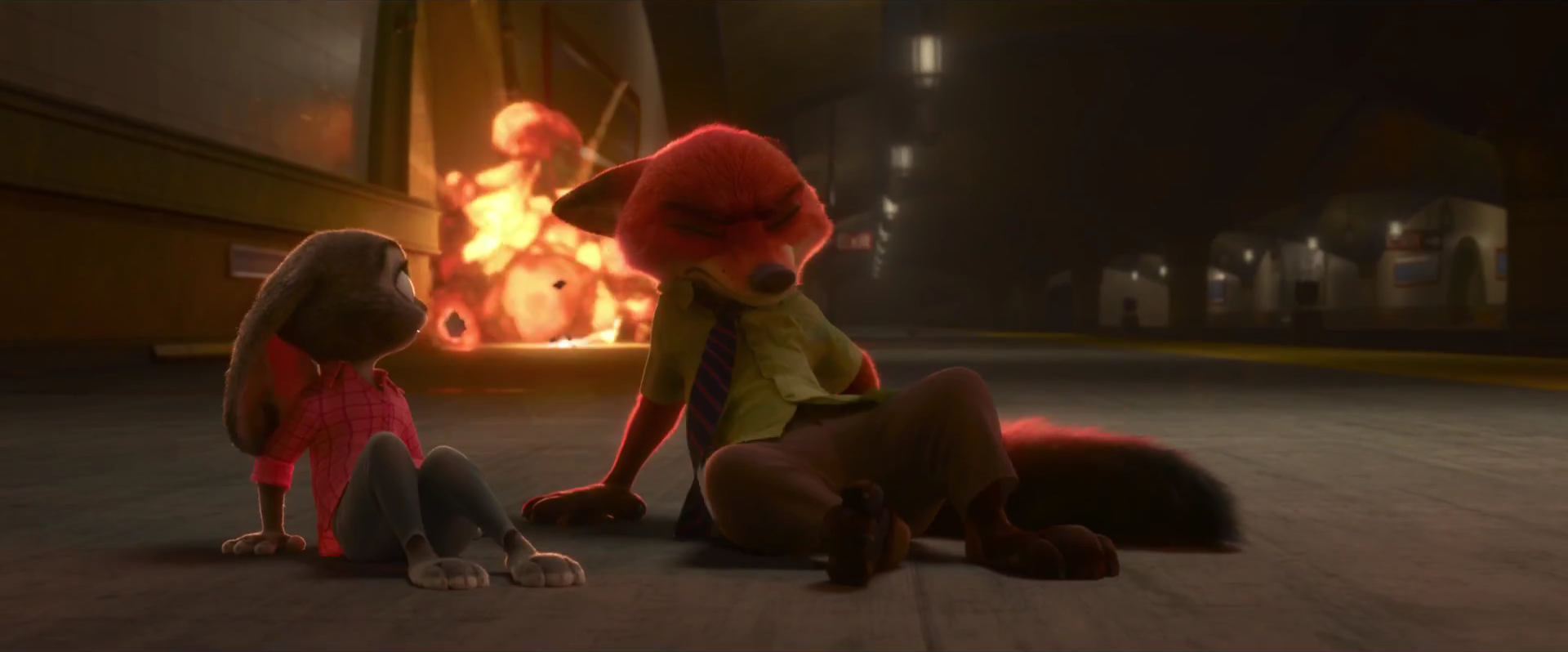
Wait, though. Zootopia does something that is, as far as I recall, a first in Disney.

There's an explosion.


(from Disney Wikia - Judy and Nick being constantly adorable together)

Things just don't explode in the Disney world. Perhaps it's the historical settings. Maybe it's the lack of technological capability. Maybe everything's so cold it doesn't seem like things even can explode.

I don't know what it is, and this isn't proper review fodder anyway, but someone needed to mention this. The innovative decision to combine family-oriented animated comedy with the cop buddy genre opened a lot of new options for the screenwriters and directors. Unconfined by the usual fantasy or animal tropes, Disney was able to have, say, Judy buy Nick a Jumbo Pop. (Simba, for example, would struggle to handle currency due to his lack of opposable thumbs.) Beyond the animal-run city, the dashingly James Bond-like water buffalo, and the use of medical labs in a non-Secret of NIMH way...

Well, there was a newfound opportunity to blow something up. Specifically a rail car. Well played, Disney. I enjoyed it. KA-BOOM indeed.

Thursday, March 3, 2016

Chuck Wendig Tells the Truth about Novel Writing in Two Sentences

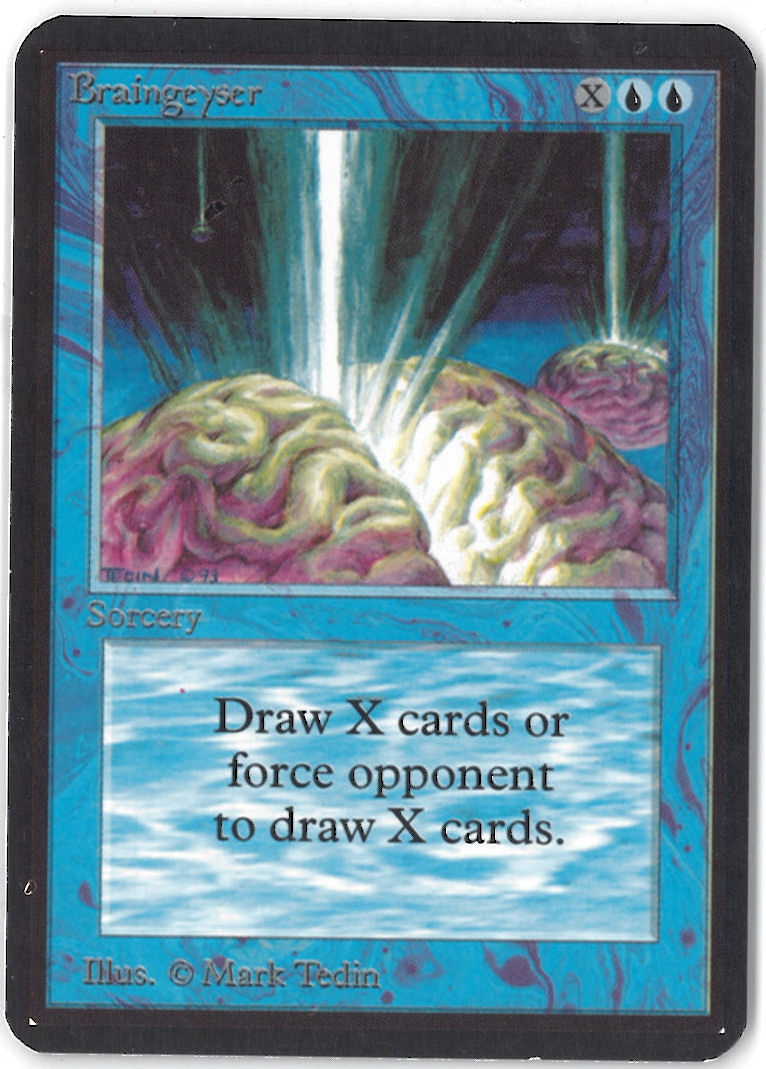
People like sound bytes. There's something comforting in being able to take a complex, or even frightening topic, and sum it up in a short, witty way that makes you smile. Novel writing, unfortunately, doesn't typically have this luxury. How many times have you, awkwardly on the spot, said something like "Well, there's this guy (a character!), who lives in this place (a setting!), and does this thing (a plot point!)..."? If you're like me, very few, but you didn't need many times doing that to realize novels are more than their component parts. They're solitary* pursuits that push authors** to explore the deepest reaches of their minds, to expand upon literary traditions in ways that haven't been done before... I picture novel writing like this:

(image from greenconduct.com)
It's the opening of the mind combined with a flash of light for every idea. It's taking advantage of your brain to any extent you desire. It's something you can only do yourself, to absorb all the credit and all the blame. It's, to quote Chuck Wendig, this:

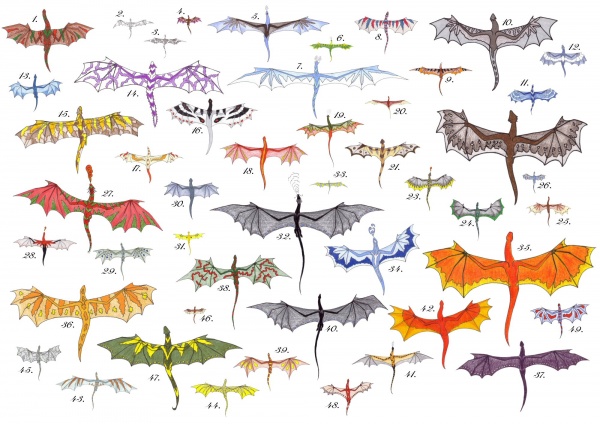
Nobody can do this shit for you. When it all comes down to it, you’re the one motherfucker who can slay this dragon and make a hat from his skull, a coat from his scales, and a tale from his tongue.

If there's one thing above all else that can make someone work all hours of the day and night on a project that, statistically, probably won't pay a cent, this is it. Why write a novel? Because only you can write this novel.*** One of the reasons many jobs are undesirable or uninspiring is because of how fungible the workers are. Although bookstores' shelves burst with novels in every genre, they aren't bursting with a thousand variations on your novel. If you're aiming for something loftier than a stock romance novel, if it isn't there, it just isn't there.

Oddly, the above quotation comes from Thing #22 in an old post about NaNoWriMo. I refuse to endorse NaNoWriMo, but I think Wendig's post is useful for considering any sort of novel writing, especially on a timeline.

Write, then, and write you.


*I love writing groups dearly, but when it comes down to it... read the next paragraph.
**Good authors, at least.
***I'm breaking my rule against starting sentences with conjunctions here. I think it adds effect in this situation.

Wednesday, March 2, 2016

Relentlessness

Every so often, *gasp* I've given life advice. Today on Quora, I did just that.

College can be tough. There are tons of courses (it was five per semester for me), new experiences (I finally learned to cook when I moved away from home), and a lot of pressure to succeed. I've done it. I encourage it. I'm a huge proponent of higher education, so I always like to see people succeed in it.

Someone had the energy to ask what it takes to be relentless in college. I like that.

Monday, February 29, 2016

Happy Leap Day!

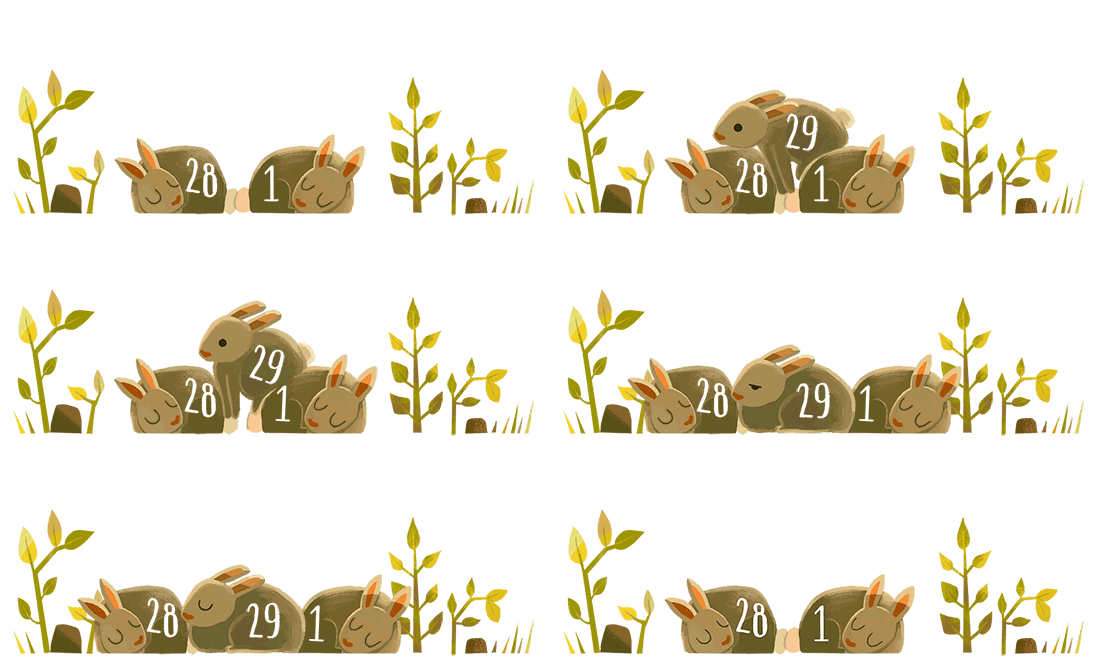
It's Leap Day. It happens once every four years. Statistically, it's more special than your birthday or Christmas. It's my friend's birthday. (Hi, Kris!) The last time it happened, I was out for dinner with a friend. (Hi, Emily!) Now, I'm sitting at home having my first Leap Day drink in at least eight years. It's a joyous day.

Plenty of websites will give you the history of Leap Day. What I think is more interesting is how rare Leap Day is, a quarter as common as all annual holidays, yet it comes just as regularly. It's like waiting for an Olympics (specific to season) or a US Presidential Election. A day like today makes us ask: what else could be so rare? (As opposed to, say, literal leaping. Even among humans.)

Putrella the gigantic carnivorous plant doesn't bloom very often.

Poland doesn't do well in the World Cup very often.

Deimos just doesn't come along as often as Phobos.

Some events need to be cherished. Leap Day, you're one of them!


Sunday, February 28, 2016

February's Book: His Majesty's Dragon

His Majesty's Dragon by Naomi Novik
Fantasy (2006 - 353 pp.)

His Majesty's Dragon, the debut novel by coder-turned-author Naomi Novik, is exactly what it sounds like. The very short version is that the series (this is Book 1) takes place during the Napoleonic Wars, with this book occurring in 1804-1805, except there are dragons. Understandably, this is not garden-variety historical fiction. The good guys, for our purposes, are the British, who include Captain Will Laurence and his dragon Temeraire.

My first reaction to His Majesty's Dragon, which may or may not be appropriate, is that the dragons are extremely cute. Laurence agrees, tending to Temeraire even when other riders do not and reading Temeraire books Laurence would not normally find interesting. Other dragons, like Levitas and Lily, exhibit a similar combined animal-humanness that remind us of whenever our cats talk. The bond between Laurence and Temeraire defines the book, and I suspect* defines the series. I also like that Laurence retains friends in the Navy, like Lieutenant-turned-Captain Tom Riley, so we can see the war unfold on a grander scale.

Novik nails her adventure theme and her battle scenes. The parts in between bring up the endless debate regarding whether "Show, Don't Tell" is literary gospel or merely a highly bendable rule. Novik is fond of telling anything besides the Laurence-Temeraire bonding moments, the Laurence-other characters bonding moments (don't look away, Roland), or the times when dragons very excitingly blast everything in their paths. Dragons are capable of fire, acid, supersonic roars, all sorts of claw and bite maneuvers, and anything else you could imagine from a creature large enough to have  an entire crew strapped to it. They are air forces 110 years before air forces. The way Novik calls them "the Aerial Corps", combined with the inherent social interactions of people living with highly intelligent flying lizards, make the book's flavour. I like her summaries of the interim parts of the book, but I could have gone for a few more man on the street pieces about dragon care.

Something I would have loved to have seen more of is a true prologue to the series of Temeraire as a baby. Although we see Temeraire's hatching, and his rearing up to gargantuan level, he is highly articulate out of the egg and enormous within weeks. It would have been nice to have seen dragons take longer to grow up, or at least be so addicted to having books read to them. I admit this is tough given the extremely short timeline the characters work with, but then maybe a few more pages could have been put into each month. I would read a 400+ page book in order to have more scenes of a baby Temeraire learning English and learning the value of books rather than having those qualities magically gifted to him.

*                    *                    *                    *                    *

His Majesty's Dragon fits into a recent explosion of dragon fiction. There are a couple non-literary examples that came to light for me almost immediately: hit movie How to Train Your Dragon and Sim City-meets-Pokémon world-building app Dragonvale.** Each of these franchises has different colours of dragons, each features dragons interacting with people in surprisingly benign ways, and each focuses on how the dragons are just so unbelievably adorable.

This brings me to a more extrinsic point: dragons may be causing the new Nature Fakers Controversy. In short, that early 20th-century literary debate was between the science-backed people who claimed that animals should be represented as realistically as possible and the sentiment-backed people who claimed that animals should be represented according to how they feel. This dispute was not limited to academic literature; Jack London was accused of, as one might say in 1906, nature fakery.

As someone who grew up reading Beatrix Potter in box set form, and who has only studied the sciences a little at the post-secondary level, I naturally side with the latter. Nonetheless, many celebrated figures disagreed with me, and even then-President Theodore Roosevelt*** gave his opinion on the issue. The issue was never completely resolved, although the science side seemed to win out... until the '80s happened.

This raises the question of whether legions of sickly-sweet dragons are suitable for young children. Are we making monitor lizards too desirable? This is an issue Barack Obama needs to address during his last year in office. With the 2016 election coming up, it truly can't wait.

Ease of Reading: 10
Educational Content: 2

*I haven't read any of the other books in this series yet. I suspect I'll read about one per year, given that the "Book a Month" format makes me relatively exclusive.

**Are apps italicized like books now? Is an app at the level of a book, rather than a "Chapter"? I don't know. It's a whole work, though, so why not.

***I consider Teddy to have been the greatest President of the United States ever. Admittedly, it's not for commenting on the Nature Fakers Controversy - more for mediating the Russo-Japanese War settlement and trust-busting - but still, you have to admire a President who takes so much interest in his nation's intellectual cultural debates.

Monday, February 22, 2016

Some Thoughts on Jo Roderick's Penmanship... er, Writing Tips

Lately, I've been following Jo Roderick. He's kind of like a South African me who's more conventional, has published way more, and doesn't venture into the surreal territory I'm willing to engage on a whim. Back in December, he posted a particularly interesting blog entry called "10 Tips for Better Penmanship". It's an overall good entry, albeit not one about penmanship in the strict sense. It's a summary of writing errors commonly found in fiction and how he would fix them, which is far more compelling.

Here are my thoughts, in my sometimes-used style of analyzing every possible angle in backbreaking detail. For Jo's thoughts on the tips I cover, see the link in quotation marks above. Whenever the text looks comically different from the rest of this blog entry, that's his words, making them extra easy to track.

Tip 1 – Stop Repeating Yourself


Jo opens with a discussion of how often characters' physical descriptions are repeated unnecessarily and goes from there. This is something I've thought about a lot as an author who is (hopefully) good now but wasn't always that way. A funny example is Jo's quip, "it is probably safe to assume he retains the above-mentioned physique when the couple next makes love". Details mentioned once are assumed to persist until something changes them. I like that. I really, really, very much, so much so, to the end of the world, a million times over, the same way I like puppies, like that.

One exception: when there needs to be severe emphasis, or a character is going insane. Phrases I make up on the spot like "Johan, who was crazed to the point of insanity, said to himself, 'I murdered him to death'" have a certain charm. Then again, when isn't character insanity an exception to most rules?

Tip 2 – Can it Actually Happen?


I agree with the vast majority of this tip.  "Be wary of using terms and phrases that ‘sound’ correct, but aren’t." The example of someone throwing a car made me laugh. This is a time when it's important to distinguish between figurative language and sounding silly. Figurative language factors into many of my responses here, but when a character shouldn't be able to do something, it can't solve the problem.

Tip 3 – Stop Pressing Buttons


This is where I just barely start to disagree. I agree too much detail can bog down a story, such as when Jo says " the reader knows how to unlock car doors, put a key into the ignition, and that in order to drive the vehicle, he or she would need to be seated in the driver’s seat." However, that level of detail can enhance the story in some odd situations, such as:

As with most rules, what I like to say is "follow them unless you have a reason not to".


Tip 4 – Irrelevance


We're building off of #3 here, aren't we? One might even say this tip repeats #3, which, of course, violates #1. Nonetheless, I agree with Jo there are some key differences here. Pressing buttons can get specific. Irrelevance is more general...

...until it isn't.

This leads me to my least favourite literary convention: Chekhov's Gun.

Schchukin quotes Chekhov:

If you say in the first chapter that there is a rifle hanging on a wall, in the second or third chapter it absolutely must go off. If it’s not going to be fired, it shouldn’t be hanging there.
I completely disagree.

What if the rifle is hanging on the wall of a proud gun owner? What if it's hanging on the wall of a loyalist to a forgotten cause, such as a United Empire loyalist stuck in the USA after ~1800 or an ex-Confederate vet during the Reconstruction? What if it's the owner's idea of style? While I admit I'm taking Chekhov literally here, there are many reasons to include a detail. Maybe it's simply a weird detail that perks up a visitor whether it is or isn't relevant.

Discussions of relevance make me feel like literature is a dialogue between Anton Chekhov (each detail must have purpose for the story) and Henry James (life should be described as it is seen). I side with James.

I'll pick at Jo's words here: "If a scene requires additional information, then as a reader, I encourage that you provide it." What does a scene ever require? When you walk into a room, do you think "What does this room require to become a compelling setting for a story?" or do you simply see the room? I think it's the latter. If you walked into someone's living room for the first time and saw a shocking painting on the wall, you'd comment on it at the time even if it never affected your relationship with that person. Then, I live in the moment as a writer rather than think about every story as being spun around a campfire years after it happens. Every book is different.

Tip 5 – Senseless Branding


In general, yes, using a brand to simulate reality doesn't work: " Throwing names of famous brands and clothing labels at the reader is meaningless unless they know what you are writing about." Well, yeah. I don't know whether this qualifies as "senseless", but I enjoy making my own brands for realistic-ish stories that convey how people perceive brands. As with any rule versus any reason to break it, "Why?" is the key question, which makes the "senseless" qualifier either a great idea or a cop-out.

Tip 6 – Don’t Break the Rules


Well... maybe. Jo's thesis is this: "Better yet, don’t break the rules, but rather learn to write more vibrantly." What if writing more vibrantly breaks the rules? To use a music analogy, what if breaking the rules resulted in something far more vibrant than anyone could have imagined? The problem with rules, and with breaking them, is you're never quite sure when breaking them was a good idea and when it wasn't. One of the only ways to know a rule shouldn't have been broken is if you've broken it inappropriately. Literature may be an example of the martyr effect, in which most business/books/etc. fail in part because of the inordinate pain in those who succeed.

The general rule is to obey the rules unless it's more beneficial to break the rule than otherwise. So... usually follow the rules.

Tip 7 – Avoid Speaking Tags

I have a rule for this one. It creates an exception to Jo's rule while also enforcing that "You cannot cough, purr, or sigh speech. If you are about to argue with me, try to cough out a line of Shakespeare, or purr an entire paragraph." I've done this. Most people have. The key is the length of the sentence. "Not this again," he sighed. One can actually sigh a sentence of this length. "I was so excited for you," she purred. Again, one can purr this phrase. Can you make the sound in the amount of time it takes for the sound to occur? That's what determines whether the phrase can happen properly. While you're writing it, say it. If you can say it, it's probably good. If you can't, it's definitely not. I certainly agree that sighing or purring 100+ words is something worthy of the Guinness Book of World Records. A smaller sentence is doable.

Tip 8 – Avoid Ambiguous Adjectives


"Don’t write things that cannot happen. For example, a door cannot swing on quiet or noisy hinges." This echoes #2, with which I agree. An exception is personification. Sure, quiet or noisy hinges can't swing. What if the hinges seemed to act of their own accord, to use a hackneyed phrase? It can happen.

Tip 9 – Perfect your Grammar and Punctuation


I agree with Jo completely.

Bonus Tip – Be consistent!


Yes, but no. Here's one of Jo's thoughts: "If character has to work late, and has a burdening amount of stress to deal with, don’t have her reclining minutes later, eating bonbons and sipping champagne. Unless there is a good reason or something has changed in the scenario, be consistent." What if the character is dying for a chance to relax before staying at work for the big night?

Although I love consistency in general, having a character act inconsistently can either take him/her out of his/her comfort zone or establish a sense of humanity. The ancient idea that fictional characters must act consistently is often either stretched beyond its natural boundary or adhered to so dogmatically that characters end up being far less realistic than real people. People act out of character all the time. I love seeing it in fiction, as it's a signal the author has developed a real person rather than punched out an archetype. Then, I'm a bigger fan of The Sound and the Fury than The Hunger Games...


On a final note, enjoy your writing, but please remember that creative licence doesn’t extend beyond the realm of reality unless you are writing fantasy.
I do like dragons ….

So do I! More on dragons in the coming days from me.

I understand this note wasn't about dragons, but I love dragons so I'm making it about them.